Mostrando las entradas con la etiqueta indigenous peoples. Mostrar todas las entradas

15 abril 2011

porque se amo mi comité

email from a dissertation committee member this morning:

Your research question should just be a photo of a luchadora mid-leap from the top rope follwed by "what the f* is up with this?"

yep, he can stay.

11 marzo 2011

embalajar 1

i'm packing up things from the place i've lived the longest since leaving my parents' home (only slightly longer than 912 hamlin). this is a place that has felt like home. a place i've lived.

and so, i'm going through a box of papers i've been toting around for about 6 years. i thought i'd share this gem. i'm not sure when i wrote it, but it was between a national geographic map of north american cultures and a copy of my 2006 tax returns.


we once drove over the mountain
a 2 hour trip at 11 pm
just to consume illegal substances
and return 5 hours later
hung over, sore, exhausted.
we stayed up all night chanting
in a language we didn't understand
and unknowingly ruined the cake.
we were enigmas of the desert
unbridled, unburdened, young, strong, and restless.

but we can't keep it up any more.

we fly in from the east coast
now 2 less than we were
wearing nice shoes
with purses and 3 piece suits
here we are somehow adult, still drinking vodka
from plastic bottles
but we can't stay up past 12
we are slowly dying, our adopted clan
as we cling to that language we only
borrowed superficially.


27 febrero 2011

en el distrito

it was one of those dc days.


the morning started with some reading in the center of union station. then off to library of congress. after attempting some academic-y stuff there, i gave up and checked out their exhibit called "exploring the early americas." aside from cringing at the fact that one might discount everything that happened in the hemisphere prior to 1492 by refering to colón's landing and its aftermath as "early," i enjoyed the exhibit. it was heavily maya focused, with a mere display case each for taíno, inca, and aztec. but there were some pretty fantastic old maps. i would have liked more maps of course, but alas. i suppose my disappointment was that they were very spaced out. 1502, 1516, and then we jump to the 1700s.


i headed out of LoC toward the mall, but as i passed the lower senate park, i saw a bunch of folks standing around in bright orange shirts, with signs and a loudspeaker. as i got closer i could see the iconic round blue NOW "keep abortion legal" signs, so i crossed the street to see what was what. i stood at the back for a moment, leaning on a tree, feeling very much like the new anthropologist trying hard to participate/observe, but feeling mostly like a voyeur. shortly after though, i recognized ilianorama in the crowd and went to stand by her. i heard the last speaker, and then the crowd went off to march in solidarity with planned parenthood, and i continued west toward the mall.


i have been telling myself for two years that when i get the winter blues, i really should just head straight for the national botanical garden and revive my warm weather spirits, but today was the first time i actually took myself up on the suggestion. i found a lovely bench in the middle of the jungle room and actually got through about 100 pages. i ended my garden experience by wandering around the desert room and medicinal plant room, then headed toward the metro stopping by the sculpture garden along the way.


this evening i met mattt and company (jbosch, brot, et al) at my favorite place for revolutionary cuisine. i had some pasta (first meal of the day!) and some drinks. we thought about moving to the raven after dinner, but were worried it'd be too crowded, so mattt & i went on a reconnaissance mission. indeed the bird was over crowded as we peeked in through the new (but nonetheless, held together by duck tape) picture window. greg noticed me from behind the bar and gave a wave, but we didn't brave the crowd. we just returned to papa karl's and left shortly after.


on my way home, i rounded the corner and ran into katieq of the woco days. turns out she's getting a phd at american now too. funny how those things happen.

there was nothing terribly out of the ordinary about today other than that i made a point to really live in this city in which i'm located. i ran into old and new friends, took advantage of the wonderful smithsonian institution, and even got some work done (though never enough!). i wish i had days like this more often, however. it felt full and fun and fulfilling. and i've only got 3 weeks left here. i need to make the most of it.

01 diciembre 2010

recordar Bon Vinai (parte dos)

The Recycled Minds blog (linked in the IHE piece) reproduces the language of the change. After reading it, I think it is simple insecurity on the part of "scientific anthropologists" that is inspiring the hubub. The changes in no way denigrate scientific approaches, they simply don't mention them. To me this does not in any way de-legitimize scientific approaches, it simply provides a more inclusive framework for what anthropology can be.

As I've always said, the beauty of anthropology is you can do anything you want* and call it "anthropology" (*with proper theoretical and contextual backing).

I think the real issue is stemming from the fact that the "scientific" parts of the discipline are already marginalized to an extent. The change is serving to remove one small claim to centrality they had. So, I think its more of a political issue than ideological issue here. But then again...what isn't?

recordar Bon Vinai

There's been all sorts of hubub because the AAA's "future plan" (not its mission statement) has dropped the word "science." And thus, of course, this Inside Higher Ed article is being widely circulated.

Now, I haven't read the full text of the future plan, so I shall reserve official judgement on the change in the future plan (though my initial reaction is that--despite my usual proselytizing against "objectivity" and quantitative data--scientific components are important to anthropology, particularly in linguistic, bio/physical, and archaeological sub-disciplines and to remove the wording is only to further distance these important aspects of anthropology from the hegemonic cultural forms). However, the IHE article is annoying me because its reproducing something that I think is all too common both among academics, and the public at large: a false dichotomy between "science" and "local ways of knowing" or "humanities approaches" (I think 6th grade science teachers may be to blame). It seems to me that the strength of anthropology is the ability to incorporate different ways of knowing. To understand something scientifically while not foreclosing other ways of understanding the issue. So perhaps that means that "science" should remain in the future plan, but I'll reserve judgement until I actually read the thing.

In the article however, I particularly found the last statement interesting.

"Are we to accept the local explanation that children are dying ... because someone is breaking a taboo and the gods are angry," he said, "or do we look to see how fecal matter is being introduced to the water supply?"

I think the false dichotomy is most evident here. A good anthropologist knows that their own understanding of a situation may be different than the understanding of those around them, but simply jabbering on about microbes to people who haven't had advanced chemistry or biology training isn't going to get very far. Rather understanding danger, but communicating in a way that makes sense in the local lexicon and view are what make anthropology a valuable tool, at least in public health situations.

Anyway, this all reminded me of something written by one of my favorite past professors. Dwight Conquergood worked with Hmong refugees in Thailand, and helped design and direct "a health education campaign based on native beliefs and values and communicated in culturally appropriate forms." --using community theater.

Health Theatre in a Hmong Refugee Camp: Performance, Communication, and Culture

A few excerpts:

"Specifically, we started a refugee performance company that produced skits and scenarios drawing on Hmong folklore and traditional communicative forms, such as proverbs, storytelling, and folksinging, to develop critical awareness about the health problems in Ban Vinai."

"Any communication campaign that ignored the indigenous cultural strengths of performance would be doomed to failure."

"Simplistic health messages imported from Western middle-class notions of cleanliness simply would not work for Ban Vinai. What was needed was a health education and consciousness-raising program that was sensitive to the history and specific environmental problems and constraints of the camp."

Using the character of "Mother Clean" and Drawing on the poj ntxoog evil ogre character from Hmong folklore, they created an ugly Garbage Troll.

"Mother Clean would lovingly amplify the message of proverbs, explaining how a small village on a mountain slope with plenty of space for everyone could absorb organic refuse naturally through the elements of wind and rain. She pointed out that Ban Vinai is very different from the mountaintop villages in which the Hmong used to live. Consequently, customs and habits, particularly regarding garbage, needed to change accordingly. She exhorted a change in behavior without degrading the people whom she was trying to persuade, locating responsibility in the environmental circumstances."

24 setiembre 2010

los diarios motocicleta

i watched the motorcycle diaries tonight for what i believe was the third time. its a gorgeous movie, haunting at times, and appeals to my leanings (however one would describe them). but its also the "intertextuality" of the film that makes me love it so much. for some reason its touched my life in strange ways.


to begin with, z-gil (the first of my anthro-gils) took me to see it in hopes of persuading me that latin america, not china, was a more fitting fieldwork location. the ploy worked. possibly too well. and here i am writing in a blog i started upon going off to perú.

secondly, most people know i have a soft spot for one gael garcía bernal. and seeing him always reminds me of that patrón party for cuarón where i hoped he'd be. alas, i had to settle for heather graham. and it was possibly the only time i "used" my NYRB credentials. but that was also the first time i met val. which is suppose is somehow significant. (note that despite a strong desire, i am not referring to her by the borat-inspired nickname)

its strange i suppose. the movie makes me remember places more than anything. lima and la paz (though i only noticed on this viewing that they never make it to bolivia-which is a shame, because 1952--the year they traveled--was also the year that land reform took place in bolivia). carbondale. jersey city. places that evoke strong nostalgia coupled with memories of unhappiness, at times. as the admiral wolye-holt would put it, the "kind of beaut[iful feeling] that hurts"

29 julio 2009

esta enferm@

so, i've been sick the last few days and therefore doing a lot of reading. mostly from Odd Tribes: Toward a Cultural Analysis of White People (Hartigan 2005) (review here), but today also an as-of-now unpublished paper a friend is writing on post-accord politics in guatemala.

In OT, Hartigan attempts to focus attention on the fact that classism within "whiteness" reaffirms and solidifies the hegemony of whiteness. Though I take issues with some of his approaches (which I fully intend to write about here eventually), he also makes some excellent points. One of which reminded me of a few films made by d'vine around election time.


Hartigan writes (p. 157) about Time reporter Steve Lopez's investigation of Southern whites' reasons for voting for George W. Bush in 2000. "More often than not, when I asked people "Why Bush?" it was as if they had zinc deficiency. The smile would freeze, the eyes would cloud, and all signs of intelligence would fade." Hartigan comments, "This image reproduces the most enduring images of rural poor whites: faded or absent intelligence, stemming from some sort of indelible physical deficiency."

Now, as a disclaimer (#1), i think that d'vine is a fantastic professor, advisor, humanitarian, activist, writer, and person in general. But my point is he is falling into a common trap in which it is ok to disrespect certain types of peoples' opinions because they don't quite jive with the ways in which the upwardly mobile, urban, liberal, well-traveled, lucky ones think. And I'm not condoning the racism and other -isms present in the narratives in his short films. But I also think the particular way they are framed (and perhaps edited) contributes to disrespect. And I think the second film illustrates particularly well the way in which the filmmaker (and presumably viewer) are positioned as morally and intellectually superior to Noe. We are invited to approve of and commend him for his decision. Had he decided differently, we would be invited to judge him disapprovingly.

(disclaimer #2-these videos were not intended to be "neutral" ethnographic accounts, but rather campaign tools, and i'm sure, if dr.vine were to conduct true ethnographic work on such people, the results would be stunning and beyond reproach)

now, back to the texan's article on Maya Guatemala: He explores reasons that many Maya seemingly contradictorily back right aligned political movements. In reviewing literature on similar topics he writes that many authors give important counterpoints to pervasive racist ideas that ignorant Mayas are tricked into aligning themselves with right wing politics.

So my point here is that in some ways this illustrates Hartigan's idea that phenotypically "white" but otherwise degraded individuals and groups are treated in similar ways to racialized "others" in different places. Obviously, all is not the same between rural Southern whites and the Maya of Huehuetenango, but I think the questioning of political affiliation without thick analysis is dangerous.

21 julio 2009

la lucha

today marks the 4 year anniversary of the day i read this.

that's right, for 4 years i dreamed of the day i might see the "cholas" wrestling. i hoped to see the power of revolution in performance. i anticipated moralization of gender and race. i expected the power of the pollera would be manifest in the ring.


on sunday, i took a little tourist bus to la Ceja en El Alto, paid my 80 Bol, shivered, and watched. my previous hopes were not quite realized. now, don't get me wrong, i am not entirely disappointed. but what i found was more tourist spectacle than local phenomenon (and i wonder if half the local phenomenon is coming to see the crazy gring@s watch the event). and most of women's empowerment seemed to come from demasculinizing men: pulling down their pants, forcing them to wear skirts, etc. Of course, the men retaliated, at times by kissing them (what's that say about sexual violence?).

so the luchadoras are not quite the feminists i had hoped (though, this does not surprise me entirely). but i've also found a lovely little anarchist feminist group. now, i just have to figure out how this all fits together...

18 julio 2009

lucha manana

look what youtube recommended for me


(and seriously, traditional inca dress? try hacienda era...)

22 noviembre 2008

piensas terceras en hablando sobre genero en nueva york

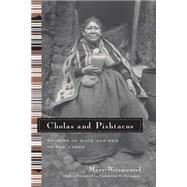
i am in the midst of writing my paper on the fighting cholitas and am revisiting Cholas and Pishtacos for the 6th or 7th time. one of my great regrets about college (and there are probably only 3 or 4--and no, not even dillo day sophomore year would count as a regret) is not taking advantage of mary weismantel's wisdom. i've essentially sainted the woman in my mind.

so, of course, whenever writing about gender, race, ethnicity, rurality, the body, really anything...in bolivia, i consult my now tattered, dogearred, noted, penciled, penned, highlighted copy of the book. usually, i only read through the things i've underlined or highlighted, since i basically try to go through the entire book in a matter of an hour. but today, for some reason, i randomly found my self reading a paragraph i had overlooked before.

"passing--whether racial or sexual--is a signifying act that attempts to con the viewer into misreading the relationship between the clothing and the body; if it is successful, the error may never be discovered " (Weismantel 2001:111)

and for a woman with her personal politics, i find this treatment shockingly problematic.

words like "misreading" and "error" construct the trans (whether it be transgender, transrace, transclass, or trans-anything else) body as inherently its "prior" state and only superficially its post-trans state. and ironically enough, just half a page before, Weismantel invokes Butler, saying:

"Identity, Butler says, is not an epistemological fact at all, but an ongoing, improvisational performance, which takes shape through the 'mundane signifying acts of linguistic life" (Butler 1990:144 in Weismantel 2001:110)

so if its all signifying--if there really is no sexed body prior to the gendered body--then what is the mistake? what is the error?

but what i find most problematic is the word "con." it, of course, elicits similar meaning to "duped," but with a moral valuation. it is not merely "misrecognition" but intentional trickery, deception, and cheating. the more i think about it, the more i decide that "dupe" really is a rather appropriate word. perhaps this isn't pc, but in the same way i dupe people into thinking i know what i'm talking about in terms of bolivian wrestling...in the same way i dupe people into thinking i am "studious," "feminine," "kind," or "laid back," trans people--really all people--"dupe" others into reading their bodies in certain ways. and not just bodies, we read material goods, language, clothing, corporeality, and even facial expression as indicative of identity constantly. so why must we talk about it as if this is something bad?

perhaps what this all means is that we, as a society (or whatever you want to call it) lack the language for talking about this without stigma. (or maybe that's too much of a linguistic determinist position)

21 julio 2008

spurlock the bilagaana

As promised, my take on “Spurlock does the rez” or perhaps more appropriately, “The rez does Spurlock”


Within the first minute of the show he used the phrase “rock the rez” and any sense of unbiased watching went completely out the window.

My positive bias was further bolstered when he went to buy a sheep. Unfortunately the sign just said “Sheep” rather than “Fat Sheep 4 Sale.” Later he helped to slaughter it, and was the person to clean out/off the stomach after butchering. Now, fortunately, I was never give that job, but I could related to the faces and comments he made in response to the smell. I remember being seated about 3 feet from a big silver bowl full of sheep intestines at the Squaw Dance, and well, I didn’t have much of an appetite after that. Except for fry bread, of course.


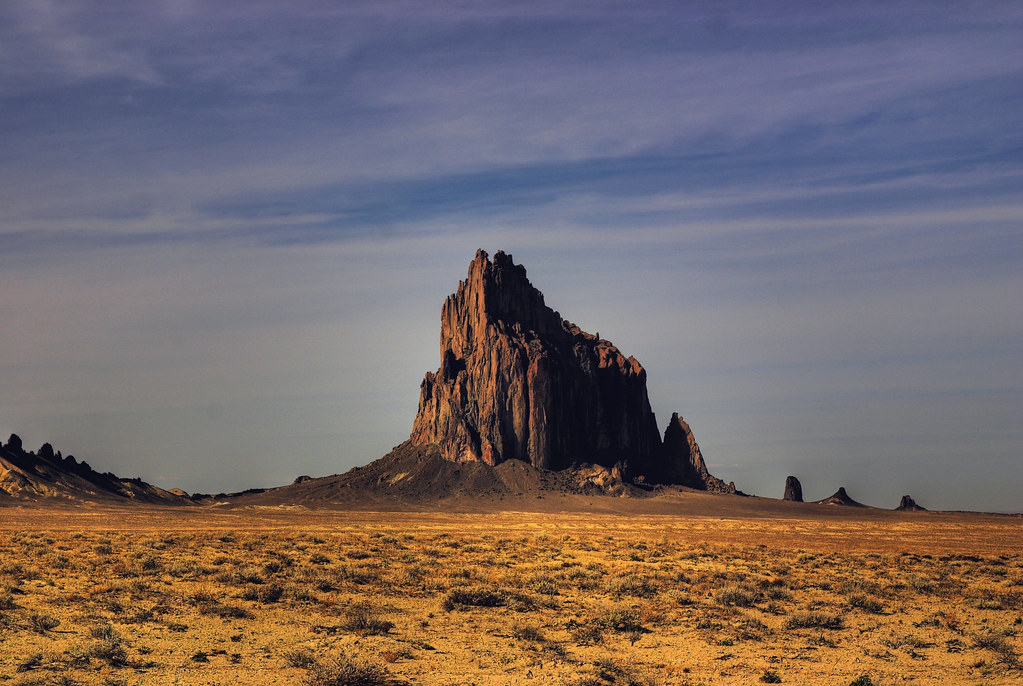
But of course all was not lovely reminiscing with Navajo tacos, Shiprock Fair rodeo, running to the sun, Diné College paraphernalia, and Benallys and Begays and Yazzies. What made the show good (and unlike Going Tribal) was the focus on the less picturesque sides of rez life. Poverty and language loss were key themes, as well as culture loss and the feeling of living between two worlds.

Spurlock did a decent job of demonstrating the rampant poverty. Though there were no scenes of completely downtrodden neighborhoods, he did mention many rez residences’ lack of running water and electricity, himself living in a hogan with neither (and also noted that now hogans are used primarily for ceremonies rather than living). Additionally, unemployment was a major factor in the program. Spurlock himself tried to find a job, interviewed a director at the Navajo job placement program, and spoke with a young man who said, “there are no jobs on the rez, its just hard, you know.” Eventually Morgan got a job at a tire shop, making $25 a day, but this development was tempered with the fact that the son of the family with whom he was staying was resigned to leave the rez to find a job after not earning enough on the rodeo circuit.

Also appreciated was Spurlock’s attempt to learn the language. He mentioned how tough it was and the previously mentioned son said, “I’ve lived here my whole life, and I don’t even know it.” Spurlock replied, “How am I going to learn it in 30 days?” Especially relevant for me was a fluke in editing: One shot is of Morgan trying to pronounce the Navajo word for horse, which Leap has mentioned a number of times that he has problems with. In the end, Morgan learned a phrase to say to Grandma (shiimazi) which was touching.

I’ve seen the show only a few times, so I’m only marginally aware of the format, but it was rather informative, with lots of Michael Moore-esque animations to illustrate facts. And while the animations were stupid, the facts that Spurlock, et. al decided to include I found rather responsible. General history, treaties, language loss, meaning behind ceremonies, and much more were addressed in a factual manner.

He did use the word “Indian” and I know that the most common nomenclature for Indigenous North Americans seems to be Indian, or American Indian, but I choose to use Native American. And this is not an uninformed choice, but is based on what a few select, close Navajo friends told me they preferred. But I digress…..

During the episode Spurlock explained to the family with whom he was living that his reason for coming was his (and presumably popular) lack of knowledge of indigenous North Americans. He explained that school history classes don’t do justice to the subject, so he wanted to learn from them so that he could teach others. And in fact, I even learned a few things from the show:

• sheep’s throats should be cut facing the east because good things come with the sun from the    east.
• An 1868 treaty with the U.S. gave rights to use the San Juan river’s water to the U.S.    Government in exchange for the U.S. accepting responsibility to make sure basic necessities    were provided for the Navajo.
• Running toward the sun is not just something that takes place during kinaaldas (which were    sadly absent—follow your nose!), but many Navajos do it every morning to start each day with  a clear mind.


At the end, he did get a little idealistic (verging on exotic) and pondered of what might be described as “the bilagaana world” and “the Navajo world,” “Why can’t we have both? Why can’t we move forward in this world and still have the values and heritage that make us who we are?” In the end, I came away thinking that his demonstration of both the positive and negative aspects of the rez really gave a good picture of, as the Admiral would say, “Beauty that hurts.”

07 julio 2008

belleza

you might have noticed a change in the scenery around here. i was a little tired of the dreary dark background. i kept it dark for reasons discussed here, but i thought a little circular excitement was warranted.

now on to the real beauty...i bought a wedding card for little beth yazzie yesterday. a day late. and obviously, it'll reach her far later. probably after they've left on their whirlwind world wide honeymoon. i should probably buy a small, useful gift too...i just don't know what. and then i'll have to figure out where to send it....

...but back to the card. there wasn't a large selection of wedding cards, but i found one that talked about the beauty of love, and despite its sappiness, i thought it was perfect, because it reminded me a little of the beauty way.

All that has harmed me will leave me
leaving my body cool once more.
Within me today
I shall be well.
All fever will come from me
and leave me,leave my brow cool.
I will hear todaya
nd see today
and be my own true self today.
This is the day I shall walk.
This is the day when all that is ill will leave me
and I shall be as I was,as I walk in a cool body.
This day onwards I shall be happy
for nothing will prevent me.I
shall walk and beauty will go before me.
I shall walk and beauty will be behind me.
I shall walk and beauty will be above me.
I shall walk and beauty will be beneath me.
I shall walk and beauty will surround me.
I shall walk and speak of beauty.
For the rest of my days I shall be whole,
for all things are beautiful.

sa'a naghai bik'e hozho

and just one more little piece of navajo beauty....mmmm....gotta make some frybread soon.

01 julio 2008

coca por favor!

are you serious?

you really think you're going to eradicate coca production and consumption?

ok, usually i agree with the UN. Kofi & Co. seem to generally (but by no means always) have a handle on reality. but this is just ridiculous.

I will control myself here, and not launch into a 5 page long rant on the disastrous ideas that are the "war on drugs." let's just suffice to say that when North Atlantic nations start sticking there drug sniffing dogs in places they don't belong, things like La Violencia in Colombia start to happen.

Sure cocaine is bad. Other coca derived drugs are too. But obviously, the U.S.'s policies are not working, as demonstrated by recent WHO findings. Maybe they way to stop its use is to create a world in which people are not faced with such awful realities that they turn to drug use. Ideaslistic? sure. But not any more far-fetched than thinking coca production can be totally eradicated.

24 junio 2008

los perdidos

well, it seems the "postcard" effect (something I've totally co-opted from Gill and blown out of proportion) is alive and well.

The Lost Tribe of the Amazon

but at least it was being used for anti-logging (presumably anti exploitation?) purposes.

31 diciembre 2007

tubular

just stumbled across native american tube. i thought it deserved a link. partially so i can find it later.

enjoy.

today marks the 2 year anniversary of the last real rez rendezvous. and about 6months until the next (hopefully). i'll be missing all my bilagaanas tonight.

04 octubre 2007

t’áá hwó’ ají téego

the rez has stepped up its exercise program it seems. k has informed me that they are hosting a marathon (which i'm half tempted to try to train for--maybe next year), and now they've got rez robics videos. what i wouldn't give to get my hands on one of those.

now if they can just get the koolade out of city market and make taco bell "run for the border," as howard would say.

(i enjoy the leisure life at spider rock campground)

15 agosto 2007

mixtec, zapotec, xinka, moche, y aguarana

i worked all day yesterday writing little reports on the above mentioned indigenous groups. plus i did a long summary of santeria. i wish my job had involved more of this while i was actually working full time.

afterwards, i was a little burnt out so i opened my $7 bottle of wine. it wasn't very good. but i drank about half of it while watching crappy tv. then i made a frozen pizza, which made the kitchen & living room really hot, so i thought about making it ndt, but being alone, that just seemed a little too pathetic. i went to bed far earlier than usual, but still didn't wake up until the usual time this morning.

i was more productive today. i actually took a shower, and i called some au offices to find out about student ids and parking. oh, what an exciting life i lead.

30 mayo 2006

indigenistas de norte y sur america

lovely kj from the nyrb gave me an old lonely planet peru book this weekend. yesterday, in the humid heat i walked to the park and read a bit. i was especially interested in the parts about indigenous peoples, and found many parallels with the dine'. the most interesting, i thought was the fact that it seems a lot of indigenous groups prefer a very light delicate handshake to the more hardy western version. there were also some interesting parallels between cocoa and mountain tobacco. And it seems that in every language the semantics of how one refers to indigenous people is important. indigenistas, not indios. native americans, not indians. or redskins for that matter. but my favorite part, was the mention of pouring a bit of alcohol out for mother earth. "Echamos una para la Pachamama." Just like pouring one out for my homies. ...I wonder what Lance is up to these days...