25 abril 2013
ser mujer en la academia
31 enero 2012
que hace un hogar?
13 octubre 2011
más cerca del hogar
These historical revolutions penetrate many citizens’ understandings of “Bolivianness” today. When I arrived in La Paz for the first time in July 2009, I did so on the eve of the annual celebration Día de La Paz. All over the city banners were hung in celebration of “200 Años Libre.” In 1809 several uprisings against royalist forces began in La Paz. Though insurgent troops did not succeed in a decisive victory over Spanish forces until 1825, it is the beginning of the campaign that is remembered as the year of freedom. On July 16, 1809 Pedro Domingo Murillo famously declared that the Bolivia revolution was igniting a fire that no one could put out. Though Murillo was hung in the Plaza de los Españoles that night, the plaza was renamed for him and he is remembered as a voice of the revolution. In 2009 banners around La Paz proclaimed, “Somos un fuego qué no se apaga!” [We are a fire that cannot be extinguished].
And so, to me, Bolivia lived up to its reputation as a hotbed of revolution. I had always (though self-consciously) romanticized Bolivian revolution a bit. [I've also written about Bolivian protest here and here]. I was continually impressed by the ways miners, teachers, and health workers could simply block off a road could and force the president into negotiations for salary increases, as had happened a few weeks after I arrived in La Paz in April 2011. I was awestruck at the “revolutionary pride” Hylton and Thomson had described, and always wondered why Bolivians were so effective at protest, while people in the US just seemed totally incapable.
Well, now, perhaps, times…they are a’changin…
Occupy Wall Street is now almost a month old, and cities like Boston, Chicago, Philly, and Madison, and Minneapolis, (and of course my beloved DC's Occupy K Street) have similar occupations afoot. I’m still my cynical self and despite my semi-sporadic presence at DC General Assembly meetings, I’m not 100% convinced the REVOLUTION is immanent. I’d still consider myself hopeful though.
I’ve been taking fieldnotes on what I’ve experienced. I guess its just habit these days. But after reading a conference paper of mine on the representation [and/or imaginary] of Bolivian protest, my advisor suggested I develop it into a longer article for publication and incorporate some stuff on the Arab Spring and Occupy Movement. I’m still unsure if I will actually do that, but its made me think more critically about what is going on.
But here, I’m going to take time to comment on what to me has seemed the biggest debate associated with occupations: Specific Demands vs. Problematizing the Status Quo. From big news outlets such as the New York Times, and Wall Street Journal down to small scale political bloggers all emphasize the major weakness of the(se) movement(s) being a lack of specific demands. And much of the grassroots organizing communities (though certainly not all) have countered that essentially, it is not their job to write laws, and if the government had been doing their job all along, we wouldn’t be in this mess [I saw this summed up in a photo of a man with a sign at some occupation somewhere and now for the life of me can’t find the picture].
I’m still unsure where I fall in this debate. But the most cogent examination of this I’ve seen thus far has suggested we must “Turn the Shame Around.”
An unjust system’s first line of defense is shame. As long as we’re ashamed to admit that we’re victims, as long as we’re ashamed to identify with the other losers, we’re helpless.
It would be great to have a 10-point plan that solves everything. It would be great to have a party that endorses that plan and a get-out-the-vote movement to put that party into office. But none of that is going to happen until large numbers of us cast off our shame, until we turn the shame around: We need to stop being ashamed that we couldn’t crack the top 1%, and instead cast shame on an economic system that only works for 1%. The people who defend that immoral system and profit from it — they should be ashamed, not us.
He compares this movement to those of LGBT rights and Feminism, suggesting that before specific aims can be approached, a politics of visibility must emerge. He of course links to We are the 99%, which may be considered the first (or at least best publicized) online repository of shame shifting. [see also Matt Taibbi’s piece on Common Dreams]
He concludes
The old rules still apply. We’re going to need policies. We’re going to need agendas and lists of demands. We’re going to need leaders to represent us and armies of volunteers to knock on doors and make phone calls and write letters to the editor. We’re going to have to register millions of voters and get them to the polls. None of that is going to happen automatically just because people lose their shame about being victims of an economy run by and for the 1%.
But I don’t believe that stuff is going to happen at all — not on the scale we need — until people lose their shame about being victims and losers. It’s just a first step, but I don’t think we can skip it.
And so, I bring us back to the materiality of representation. As Butler (1998) and Fraser (1997) famously (for nerds like me) hashed out, representation is not “merely cultural.” Representations carry material consequences. For the luchadoras, using the image of the chola not only exploits but also reproduces indigenous women’s vulnerability to physical and structural harm, at times furthing the cycle of violence and subordination. For Occupiers, representation either grants legitimacy, leading to increased attention and solidarity, or delegitimizes the movement as fringe. So, to use Spivak’s (1988) notion that representation may be conceived of in two senses, the “re-presentation” of a group deeply impacts their ability to be spoken for in political representation.
So, yes, we Occupiers must eventually demand specific actions. But given the states of visibility and representation at the moment, we must still work on building solidarity, and strength. If we narrow our demands too early, they will not be heard. At the moment, the Nation is Waiting for Protesters to Clearly Articulate Demands Before Ignoring Them.
see more of my pictures on J & M's "letter to an @narquista in the oven"
15 setiembre 2011
en casa
This morning as I reluctantly pulled myself out of bed just to be stood up on a skype call, I thought to myself, “at least I’m in the land where hot showers are dependable.”
No such luck. I have discovered that the shower in my new home—in the belly of the beast, home of the Washington Concensus—likes very much to vascillate every 3 seconds or so, between what might be described as “cool” and “really freaking hot.”
Psht. I might as well be in La Paz then.
I would have 15 Bs lunches. Any pirata I could think of. A sunny afternoon on the roof. T’tkos mystery drinks. The excitement of dodging left turns. Api with Ramiro. Authentic salteñas. A visit to my favorite laundry man. My boy Sammy. Cebras. A cab ride to Zona Sur. Los Auténticos Decadentes. Lucha libre. Telephone calls instead of Skype.
But here I have some great things too. Phô. Fast internet. Cool nights in the garden. Maker’s Mark. The excitement of dodging undergrads. Wine with my roommates. Authentic tacos. Laundry that takes 2 hours instead of 36. My cohort. Leap. Rides home with the windows down. Wilson Phillips. Low altitude footie. Telephone calls instead of Skype.
17 mayo 2011
papas fritas

in the years since, i've discovered the garlic fries at looking glass, and have drunkenly waxed on about how every bar with food should have a basket of fries for under $3. i've had district 2's disappointingly overpriced fries with truffle oil. and 4P's (still overpriced) sweetpotato fries opened up new possibilities. but when salon moved to cathedral ave. i started buying the $2.5o bags of frozen fries at giant and never shut up about how i'd beat the system. despite the rarity with which i eat "fast food" these days, i've even tried wendy's new natural cut, sea salt fries twice (conclusion: they are no better than wendy's previous fries, and in fact are worse than most fast food fries). though i wouldn't necessarily claim to be a connoisseur, i probably pay more attention to fried potatoes than your average fry eater.
and my first two weeks in la paz this time i had my fair share of fries. with sandwiches, in poutine, even with a hamburger. yes, i even tried salchipapas one fateful night (or 2). but they lacked something. is it possible i've grown out of my fry phase? i've moved on to mashed potatoes (pure de papas), and even the kinds that come out of a bag just seem so delicious these days. creamy, buttery, salt & peppery. utterly delicious. i still can't get enough ketchup, so the chips have their place, but in a way, i think fieldwork has brought on a new life phase. at least in my eating habbits. so, this place has changed me in a way more profound than perhaps even i realize. is 2am too late to go make my packet of kris pure de papas?
31 marzo 2011
de donde eres?
of course, there's the problem i've had for years. i was born on the west coast. grew up in the midwest. went to school in chicago. lived in new york. resided in DC.
but i could always fall back on the place i currently lived. the place i paid rent. where my car was registered. where i voted. where i paid taxes. but now that's over. my stuff lives in my parents' basement and closets. i sleep in a bed in chicago. my affiliation is with a school in DC. and in a week, i will physically be in Bolivia.
and so i stutter. i hesitate. i look to other people to answer for me. because i am no longer from anywhere. i am only to somewhere. to illinois. to chicago. a bolivia. and with my fromness, in a way, my history is obscured. if i'm not from dc, i have no school, i have no purpose.
leaving dc has been difficult. its the end of an era in a way. and i'm not sure i'm entirely ready for the next era. i'm hesitating about all kinds of things. but in a way, i suppose bolivia has come to symbolize a release. a relief. a place where i can just be. and there the answers are easy.
soy de los estados unidos.
15 marzo 2011
hasta luego
and my drawer was my home in all this. and in a way, cleaning out my drawer was an archaeology of grad school life (in both a binford sense and a foucaultian one). i unearthed the relics of the last 4 years. contemporary theory articles. pre-bolivia papers. approvals from all 4 comps. conference schedules. old printed emails. books, and food, and telephones, and other assorted ephemera.
and now all that remains are 4 library books.
this drawer has been a home to me more than any apartment i've occupied in DC. its is my box of essentials. my first-aid kit (whiskey). it has held soccer cleats and cookies. dissertation proposals and graded undergrad exams.
and then at the end of the day i went to my last dissertation seminar. possibly ever. and audrey was there. and ted was there. and everyone in between. and in a way it felt like a generational menagerie. a foucaultian geneology. and abby gave me some old phones that might work on gsm 1900. and i gave mahri a tent that used to be julie's. there's something so nice about the passing of goods. not only because they're useful, but because they have a history. and that history centers around this space/place. this ambition. this process.
and i said goodbye to david (though hopefully not for the last time before i leave). david who i first got to know through a shared experience of breakups. david to whom i've alluded my darkest secrets. david who shook my hand during orientation, and provided us all with a swanky party atop a downtown law office building. david who let me cry to him for 10 minutes after passing my defense.
this is not the end. it is only a new phase. but really, it is the end to some things. and its time for that end, but that doesn't mean i'm ready.
11 marzo 2011
embalajar 1
we once drove over the mountaina 2 hour trip at 11 pmjust to consume illegal substancesand return 5 hours laterhung over, sore, exhausted.we stayed up all night chantingin a language we didn't understandand unknowingly ruined the cake.we were enigmas of the desertunbridled, unburdened, young, strong, and restless.but we can't keep it up any more.we fly in from the east coastnow 2 less than we werewearing nice shoeswith purses and 3 piece suitshere we are somehow adult, still drinking vodkafrom plastic bottlesbut we can't stay up past 12we are slowly dying, our adopted clanas we cling to that language we onlyborrowed superficially.
27 febrero 2011
en el distrito


02 enero 2011
viviendo con yo
02 noviembre 2010
en cordura y el miedo
27 octubre 2010
bebiendo
28 setiembre 2010
la isla playa larga

bigotes: fieldnotes
16 setiembre 2010
abd
19 agosto 2010
a casa (de nuevo)
18 agosto 2010
a volver
25 enero 2010
estados iguales

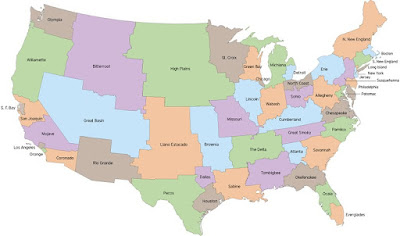
gotta keep on fighting taxation without representation!