Mostrando las entradas con la etiqueta travel. Mostrar todas las entradas

03 julio 2015

Anthropology: 2, Love: 0

I love my job. I get to learn new things, almost everyday. Things that no one knew yet. And then I get to tell other people by writing about them. That’s pretty awesome. And what makes it even more awesome is that the things I learn are about people: about their history, their current context, what they do, what they think, what they feel, and hopefully, why all of that is true. A lot of my job is just hanging out with people. Sometimes they are fascinating. Sometimes they are terribly boring. But there is always a story to tell. And I get to be the one to tell it. I get to travel to amazing places: the highest national capital in the world, the driest desert in the world. Sometimes the places are impoverished and it’s both hard to watch people suffer, and hard to live there myself. But in the end, it always feels worth it, especially if I can help relieve some of the suffering through my work.

But there’s something that’s not worth it. As of last night, I am single. My job requires movement. And that’s not good for relationships. This is the second time (a conservative estimate, a few other situations could count if I were assessing very liberally) anthropology has snatched a relationship away from me. The first time, I was so excited to spend a year doing dissertation fieldwork, but that kept me from making a commitment to a person who wanted and deserved someone who could promise they wouldn’t run away to South America for the long haul. In the end, that’s exactly what I did, and though I still deeply love and admire that person, we both know it wouldn’t have worked. The second, and more recent circumstance involved me falling madly in love with a person who lived where I researched. He was endlessly giving of assistance with research and with simply being an emotional support for someone living in a foreign country under difficult circumstances. But when I left the field site to move to the national capital for a year of analysis and writing, the distance was too much. With me planning to eventually return to the US, and him firmly rooted in his small city, we just didn’t have a workable future.

And I sit here, questioning, is it all worth it? I wouldn’t say that “settling down” is in my plans for the near future, but I would relish the opportunity to build a life with a person who I love and inspires me. I crave the kind of security that comes with knowing exactly how your head fits on their shoulder and exactly the joke that person is going to make when something goes wrong. And I wonder, is it impossible to have both? To have a partner and thrive as an anthropologist. I look at my fellow postdocs across the office, both of whom are bright young stars in their fields. Both of whom have partners. Partners who have followed them on their journey, and no doubt have at least a little sacrificed their own dreams for that of their partner. And both of my colleagues are men. Now of course, I know plenty of women who are anthropologists and have life long partnerships, but I wonder if being a woman makes it a bit harder, particularly in a context like Latin America.

In falling in love with this field, and in sacrificing so much to attempt to succeed as a scholar, have I all but given up my rights to love? I know that I am selfish. Is it possible that there is a person out there who could give up just enough to follow me on (or wait for me during) my anthropological adventures, yet is still invested enough in their own passion that they inspire me as well? The outlook is not bright, but I remain hopeful. Just as the academic job market is not bright, but I remain hopeful. Hopefully, at least one will eventually work out.


01 enero 2015

el fin del año 2014

2014 was a hard year for many reasons. Money was always an issue (despite the fact that I am fully employed in what is basically my dream job). Love was always volatile. Living quarters were less than ideal in both countries I lived in. I was depressed for at least 1/3 of the year.  But this was also the year that I learned that sometimes, in order to maintain emotional stability, one must always remember of life, that "this is an adventure." 

And while it was a year I'd never want to re-live, it's certainly worth remembering. Here were the extremes of it all. 

Best Meal
Mont Bar, Barcelona. The whole family was there, the service was exquisite, the food was tasty, the wine kept flowing, and I even got to wear my fancy new dress.

dessert (and my dress is visible in the background)

Worst Meal
Ramen. Over and over. I had 10s of dollars to my name and no way of cooking other than an electric kettle. So ramen was basically the only thing to rely on. For months. 


Best Party
New Loki La Paz Opening Toga Party. Everyone was there. Everyone was in togas. What's not to love?

"we came, we saw, we bloodbombed"

Worst Party
Goodbye London. No one showed up to the bar. Even the friend that convinced me I must have the party. I cut my losses and went to a house party, which in the end was a good time. 


Best Reunion
Loki Reunion in London. Old friends in new places is the best thing ever. 

the people who changed my life forever

Worst Reunion
I stopped by the Iquique tattoo shop only to find my least favorite South American happened to be in town and was hanging out there. 

Fanciest High Class Moment
Shooting Party, at a place quite reminiscent of Downton Abbey. 


Roughest Low Class Moment
No kitchen. No bathroom. No internet. No power. No money. I kept reminding myself "this is not my life forever."

Best Holiday Celebration
Thanksgiving. We were in London. The oven didn't work. The bottle of bourbon had an anti-theft device still attached. There was no pumpkin or cranberry. But we made the most of it with no-bake cheesecake, butternut squash, trail mix, and the broiler. And it was glorious. 


Worst Holiday Celebration
St. Patrick's Day. It always seems to end up the worst. In 2012 I had my heart broken. In 2013 I gained a stalker. In 2014, I had a baby guiness in the morning in La Paz then flew back to Iquique where I picked up what had fallen in a minor earthquake, finished a paper, and remained totally sober.

Best 24 Hours
Día de La Paz, Masage at Hotel Europa, & Pamelita's Wedding


Worst 24 Hours
That day I thought we broke up.

Best Surprise Place
The Eagle and Child, Oxford England. We randomly wandered in, looking for a good place to write a paper and discovered we were in the very corner where JRR Tolkein and CS Lewis used to write. 


Worst Surprise Place
That apartment that necessitated all the ramen. Did I mention the bathroom shared with an older couple and no hot water?

Best Death Defying Feat
-17 F. Hunkered down with the folks in Heyworth and made an adventure of it. 

it got colder

Worst Death Defying Feat
8.2 Earthquake. I really did think I was going to die. The powerless, waterless, homeless, blocked road aftermath was arguably worse.

"more than 4 thousand people are now living on the street"

aftershocks

Best Fight
Getting what we wanted for our AAA session.

Worst Fight
Santander taking 4 months to finally deny me a bank account. 

Best Encounter with an Animal
"Adopting" La Vaquera.


Worst Encounter with an Animal
Vaquera wasn't in the back seat. It cost us $40.000,00CLP ($80US).

Hardest Goodbye
My last shift in the old Loki bar


Easiest Goodbye
Getting out of Iquique for 4 months

Best "Illegal" Activity
Absinthe in Prague.


Worst "Illegal" Activity
Watching our new friend, Sin (seriously his name) resolve some sort of mafia-style dispute after the Halloween party in Brixton.

Best Student Experience
My dissertation advisor tells a new colleague that I could "hold my own" and don't "need any help," causing said colleague to appologize.

Worst Student Experience
A well respected La Paz luchador asks me about the rumors my old trainer has apparently been spreading.

Best Academic Experience
George Marcus publicly compliments my AAA paper. Also, he has awesome glasses.


Worst Academic Experience
An older academic (who shall remain nameless) continues her history of putting me down by asking how far along I am in grad school.

And there they are. The noteworthy moments of 2014. May 2015 be better, more productive, more enjoyable, more economically stable, less stressful, and less dangerous. But even if it gets worse, I'll remember that "this is an adventure." And in the end, I got to live in 2 different countries (Chile & England), and visit six more (Bolivia, Peru, Spain, France, Czech Republic, and United States), seeing at least a dozen old friends in new places. That's a pretty good track record!


11 noviembre 2011

cicatriz

Perhaps in a year when I have to send such things to potential employers I will revise, but at present my teaching philosophy goes something like this:


Minimize boredom.


That goes for both the class and me. So I’ve tried to load my syllabus with readings that, yes, teaching something about anthropology, but also bring a little spunk or pizzazz to the discussion. So, today, in order to teach about the Anthropology of Religion, we took a little detour to Black Rock City, NV. I assigned Sarah Pike’s chapter Desert Goddesses and Apocalyptic Art: Making Sacred Space at the Burning Man Festival, from the book God in the Details: American Religion in Popular Culture.


She concentrates on the ways that Burning Man participants, or burners understand their experiences as life-changing or initiatory. During the festival, some burners mark these changes on their bodies. She Sam who shares in an online forum “I got my head shaved while I was there…and emerged a new person (6 September 1997).


This, of course, reminded me of a man named Adam that I know who once (was coerced and) shaved his head in a bar. That bar was in the Ekko hostel of La Paz, and Adam was the bar manager. Strangely enough I wasn’t there that night that all the mohawks were made. As the story goes, the bar was doing a special happy hour fundraiser for a local abused children’s home. But things got a little wild and one of the barworkers, a twenty year old British girl, decided they should continue the merriment past happy hour time, charging patrons 20 Bs. for a head shave. Jorge, an older Spanish barman ran upstairs to get his electric razor. When I stopped in the bar for lunch the next day, at least half of the patrons and staff had Mohawks. Even Emma, the originator of the idea, had shaved half her head.


Over the next two weeks, several of the bar workers who had originally missed out joined in. As some of the travelers continued on, usually to Cuzco, Perú, pictures would appear online of groups of Mohawk clad young people at la Isla del Sol, Machu Picchu, Lima, or surfing in Mancora. It was, in a way a glocalization in the most meta and palimpsestous way. A temporal but embodied mode of belonging. Of marking authenticity and legitimacy. Of claiming identity.


But this was not the only way Bolivia was temporarily inscribed upon traveling bodies. Freezing nighttime temperatures and cold showers leave an unshakable chill in the body. High altitudes leave one breathless and without appetite. And when one does eat, a particular form of aftermath is inevitable as well. And Ekko itself leaves bodily traces. Cramped backs from hostel beds. Bloated livers and pounding heads after a night of rum & coke, followed by dancing at Blue. It was while living in Ekko that the Spanish word for limp, cojera, became indelibly etched in my mind. There was always someone falling off the bar or stepping on glass.


But again, these are all temporary corporeal experiences. Other travelers wanted something more permanent. I first learned of the cult of the Ekko tattoo a few days before Easter. All around the hostel were posted scavenger hunt lists. Most items involved taking pictures in local attractions or finding items around the hostel. But number nine stuck out “Take a picture of a Ekko tattoo.” Upon inquiring I learned that there were four known Ekko tattoos. The most obvious was Jaff, the bar manager (who held the job before Adam). Sean, Jaff’s precursor had one also. Alek, the manager of the hostel had one nestled among about 30 other tattoos. And Mike, the events manager at the Ekko hostel in Cuzco had one on his bicep. With Sean gone and Mike a nine hour bus ride away, scavengers really only had two choices. But the next week, that changed when Dr. Joe decided to get one as well.


I met Dr. Joe my second night in the hostel. It was supposed to be his last. I was still battling the remnants of altitude sickness, and didn’t want to stray too far from my bed. I wandered into the bar around 7:30 just looking for a meal. I ordered pasta with vegetables (not exactly “authentic” cuisine), and waited at the bar for it to arrive. It was a busy Tuesday night, and there wasn’t a stool available, so I wondered around the short tables with bench seats looking for room. There was an empty space at the table in the corner so I asked if I could join them. I noticed Dr. Joe’s accent immediately. Pure Texas. We ended up drinking a fair number of rum and coke’s together that night, and bid farewell as we went off to bed, as he was leaving at 7am the next morning.


He left to go to the Sal de Uyuni, the Amazon jungle parts of Bolivia, and who knows where else. Two weeks later, I wandered into the Ekko bar for a snack again, and saw him standing in front of the counter. Though we had only had a brief encounter before, and hadn’t even especially connected, we greeted each other like long lost friends. I suppose this is something I learned about the traveling culture during the time I spent at Ekko. There are real friends and traveling friends. But when you’re traveling, you don’t have anyone around who knows you well. Who has been through important things with you, and knows your personality. So when you find someone with whom you are even slightly familiar, a sense of comfort is likely to emerge quickly. And so, Dr. Joe became my new best friend.


A week later, he announced he would be getting an Ekko tattoo on his ankle. I was surprised because all the other Ekko tattoo bearing people had been there for months if not years. But Dr. Joe, despite his legitimate MD, was playing a little fast and loose in South America and decided he should commission Diego, a Cruceño tattoo artist staying at Ekko at the time, to permanently emblazon the Ekko logo on his body.


The Ekko logo itself was a bit unexpected, but getting tattoos in general was actually quite a popular pastime for travelers in La Paz. Pete, a guy from the US who had worked for a deathroad biking company for a year, explained to me that he had always wanted a particular design on his chest, but could never afford it in the States. It would have cost him several hundred dollars at home, but in La Paz he paid only about $70. And this popularity was cyclical in a sense. Prices were cheap, so lots of travelers wanted them. The demand was there, so tattoo shops like the one down the street started to cater to travelers and advertise in hostels. As a result it became necessary for aspiring artists like my friend Alé to have a working knowledge of English. And the more travelers who got tattoos and showed them off, the more others were convinced of their need as well.


And despite both Diego’s and Alé’s insistence that I couldn’t leave La Paz without a tatuaje or at least a perforacion, I did.


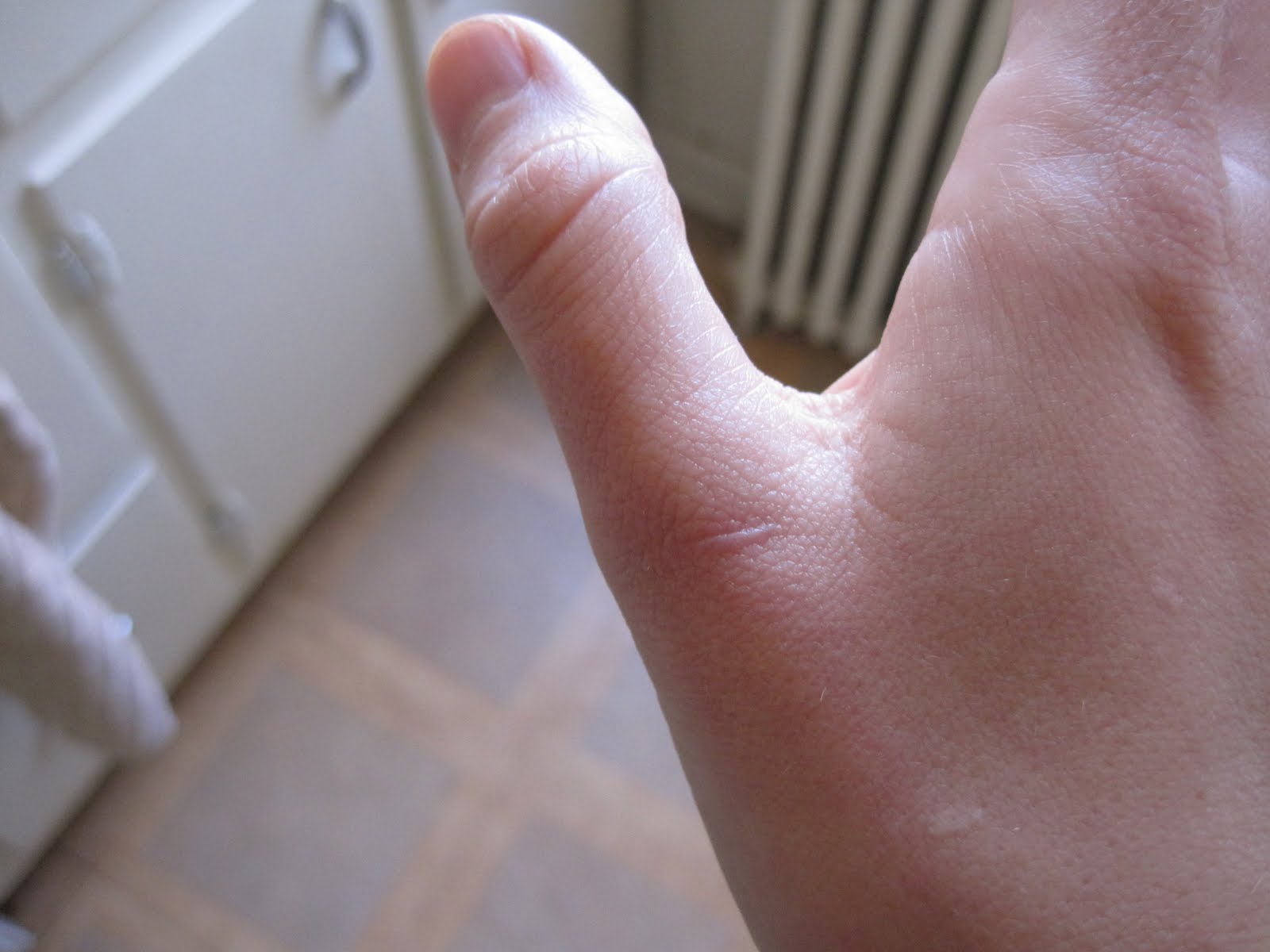
But I did not leave unmarked. About a week before I left the city, I was helping clean up in the Ekko bar after it closed one night. Timoteo, a friend of Diego’s who was going to culinary school, but had been hired by the bar to help wash dishes and keep things tidy, was tired and overwhelmed, so I offered to finish off the dirty glasses for him. I shoved my hand inside one of the large pint mugs and pulled it out with blood trickling down my wrist. There was a chip in the rim of the glass and as I scrubbed it had cut my skin. It was a short cut, but deep, and it didn’t want to stop bleeding. I looked around for bandaids and couldn’t find any. There were none in the bar or in the hostel office. And it was late, so looking around for a guest with a first aid kit was hard as well. I ended up just taping some toilet paper to the wound and holding it above my head for a while. The next day when I removed the make-shift bandage it started bleeding again. I went across the street to Farmacia Amiga and bought a real bandage (if only Dr. Joe had still been around). It stopped bleeding for good that time, but took a while to heal. When it was still visible a month later, I asked a friend if that meant that it would scar. I couldn’t contain my smile when they said “most likely.”


That little pink line is still there on the base of my right thumb, and I smile every time I notice it. Most of my friends have suggested that I should probably make up a good story about being kidnapped by one of the lucha libre empresas and having to fight my way out. And maybe someday I’ll tell someone’s grandchildren a story like that. But for now I’m content with the truth. That La Paz couldn’t let me leave unscathed. That the mind can’t change so easily without the body following suit. Indeed, as Pike writes, my “body was simultaneously liberated and constrained.”

03 octubre 2011

enfermedades

On Sunday afternoon, I set out in the early fall rain to say goodbye to a good friend. The weather had recently cooled, so I had to dig my thicker jacket out of a box in the closet. When I put it on, I found a 5 Boliviano coin in the pocket, smiling and sighing at once. The rain was more of a mist really. My lack of hood wasn’t a problem and my canvas converse shoes held the dampness out. But it was enough to reactivate the runny nose I’d been periodically fighting off for the last two weeks.


I walked up the slight hill about half a mile, listening to Velvet Underground on my ipod. Watching the passing cars splash through the wet road, and leaves waves as raindrops pushed them around put me in a slight trance. Before I knew it I was standing in front of the bar that had operated under at least 5 different names in the four years I had lived in the neighorhood. I walked in the door and found my group; JK3 and her husband, Futurama with two of her coworkers, and the Otto. The warmth of the bar coaxed even more goo from my nose and I sniffled to keep it in check.


I slid up between Otto and Futurama and put an arm on both of their shoulders. They hugged back and we exchanged hellos. In the midst I must have sniffled some more because Futurama asked if I had a cold. “Oh, just the same old runny nose as always,” I said.


And then it hit me. People here are not always sick.


I was doing fine in La Paz for about a week. Then the sniffles hit. Fortunately, for the most part, the kids in my shared dorm room were far more into the clandestine cocaine bar than sleeping at night, so my sniffles were mine alone, and caused minimal disturbance. Though the last night in the room, there was a guy next to me sleeping who had to catch a bus to the lake at 6:30 am. I know my snorting of nasal moisture woke him up a few times.


And then the intestinal problems hit. Nothing awful or urgent, but just a constant reminder that things are “not quite right” there. And annoying climbing down off a top bunk several times in the middle of the night. As Alex put it, I was fully convinced “I’ll never have a normal poo again.” But then eventually things got a little more normal.


And then I went to Cuzco. And then I had my evening of constant farts and burps, and eventual rash which convinced me that the hot pepper I had eaten earlier that day was eating through my stomach lining, and through the inner layers of my skin causing it to get red. Turns out it was just a parasite. And after 5 days of taking nasty pills and not drinking alcohol, it resolved itself.


Three days later I returned to La Paz with a cough in tow. The cough lasted approximately five weeks. I remember waking up in the middle of the night, in the staff room, unable to stop coughing. I felt bad, because these people did not all stay out til 7am at Route 36 every night. Some actually had to work at 7.

That eventually cleared up about a week before I left. Along the way I also had brief relapses of the intestinal problems, as well as sniffles again. I had a cut on my hand that took two days to stop bleeding. A burn on the side of my face (from a stick of incense) that I kept forgetting about and scratching the scab off. I saw three people hobble around after stepping on glass. In essence, my existence in Bolivia was a constant stream of malady.


And then I came back here, and developed a sore throat and sniffles. But never really thought about them as a problem. Just part of life. And then people like Futurama remind me that life can exist without constant disorder. Though strangely, this is the place where institutions and prices make getting medical care and remedies so much more difficult.


So as I walked back from the bar, after giving a last hug (at least for 6 months) to JK and the spouse, I sniffled some more. And again I was reminded of Bolivia. But this time not because of sickness. Instead, because saying goodbye was such a quotidian event there.

30 agosto 2011

2 bolos

Ok, do you know where the Obelisco is?

Despite the fact that I had walked past it at least twice a week for the last 4 months, I did not know where the Obelisco was.


No.


There were muffled discussions on the other end of the phone.


Ok, its across the Prado from the post office.


The post office I did know. So I walked downhill on Calle Colombia crossed the Prado and took a left. After a few blocks I found the fabled hotdog cart and squeezed past it through the doorway it partially occupied. I pressed on, down the concrete steps, past the scantily occupied plastic lunch tables, and there at the back I found the two hand-set bowling lanes and all six of them mid-game.


I was late and had to bowl five frames in a row. I realized quickly the lanes were warped, and as Justin put it, “these guys set pins like they’re on acid.” In the end, I was more than pleased with my score ( “chocho” as they would say in Bolivia—but not Spain or Brazil). I came in fourth of seven with 109 points, and was given a nod of approval.


A month later I found myself cruising down a Western North Carolina highway to the nearest bowling alley on the outskirts of Asheville. As my companion and I rounded a wide corner he told me the only time he’d ever scored a turkey was in Asheville when he was about 13. I responded that if I ever had such a fluke I’d be too stunned to finish the game.


And then, an hour later, on a lane in which my first gutterball of the evening hopped out of the gutter and knocked two pins down, I stood ready to throw the first ball of my tenth frame. The eighth and ninth had both been strikes. I sent the ball down the lane in a way consistent with my previous rolls. And nine pins toppled over. I shrugged my shoulders, turned my back and laughed slightly. Who was I to think I could ever master The Turkey? And then, my partner stood up with a funny look to his face. What? Look. Yes, miraculously, a pin started teetering well after the ball had left the end of the lane and eventually fell. Fortunately, just a few more rolls and I finished off the game. Yes, still in shock, but apparently no so shocked I couldn’t finish.


After several more pins falling at random times far from impact from the ball, and no less than 3 times the 10-pin formation coming down with only 9, I declared that these pin setters, as mechanical as they were, also must be on acid. Apparently that’s the only way I can even hope for mediocrity.

17 mayo 2011

papas fritas

there was a period of time when i constantly craved fries. these were the JC days, and options were abundant, though not always satisfying. there was the 24 hour mcdonalds, and plenty of drunken (usually crying) nights were accompanied by them. later i graduated to hollywood chicken, where the fries were tasty, but paled in comparison to the pizzarolls. but really, the crowning glory was white star, with their crispy steak 'n shake sized fries with just the right amount of seasoning. but even those couldn't compare to the pommes frites on second avenue.


in the years since, i've discovered the garlic fries at looking glass, and have drunkenly waxed on about how every bar with food should have a basket of fries for under $3. i've had district 2's disappointingly overpriced fries with truffle oil. and 4P's (still overpriced) sweetpotato fries opened up new possibilities. but when salon moved to cathedral ave. i started buying the $2.5o bags of frozen fries at giant and never shut up about how i'd beat the system. despite the rarity with which i eat "fast food" these days, i've even tried wendy's new natural cut, sea salt fries twice (conclusion: they are no better than wendy's previous fries, and in fact are worse than most fast food fries). though i wouldn't necessarily claim to be a connoisseur, i probably pay more attention to fried potatoes than your average fry eater.

salchipapas

and my first two weeks in la paz this time i had my fair share of fries. with sandwiches, in poutine, even with a hamburger. yes, i even tried salchipapas one fateful night (or 2). but they lacked something. is it possible i've grown out of my fry phase? i've moved on to mashed potatoes (pure de papas), and even the kinds that come out of a bag just seem so delicious these days. creamy, buttery, salt & peppery. utterly delicious. i still can't get enough ketchup, so the chips have their place, but in a way, i think fieldwork has brought on a new life phase. at least in my eating habbits. so, this place has changed me in a way more profound than perhaps even i realize. is 2am too late to go make my packet of kris pure de papas?

29 abril 2011

viajeros verdaderos

(crossposted at fieldnotes)


Two years ago, I saw Bolivian lucha libre for the first time live. I took a tourist bus and was fascinated by the conversation that ensued. The riders grappled with “knowing” that it “must be traditional” yet calling it “far too WW[E].” And while I recognized the tour company that leads the tours is probably the real culprit here (wasn’t it Ani Difranco that said “look at where the profits are/that's how you'll find the source/of the big lie that you and i/both know so well”?), I saw these young travelers as naïve, exploitative, and at times offensive.


And it was easy to write about that. To follow the age-old critique of colonialist/ imperialist/orientalist travel. And I don’t mean I did so in a righteous way—in fact is was a matter of accidental convenience, but I ended up challenging those assumptions (and isn’t it Tom Robbins who said “You risked your life, but what else have you ever risked? Have you risked disapproval? Have you ever risked economic security? Have you ever risked a belief? I see nothing particularly courageous about risking one's life. So you lose it, you go to your hero's heaven and everything is milk and honey 'til the end of time. Right? You get your reward and suffer no earthly consequences. That's not courage. Real courage is risking something that might force you to rethink your thoughts and suffer change and stretch consciousness. Real courage is risking one's clichés”?). So I stayed in the Ekko* hostel for two weeks, to get a better ethnographic perspective on the tourism in La Paz (and also to give me time to find a permanent place).


And my fieldnotes are filled with an undertone of “OMG” and “What is wrong with these people?”, but I also met some really amazing people who I respect and at times admire.


And so, amidst emails to tour companies and the Fulbright office, phone calls to friends of friends in La Paz, and no small amount of viewing wrestling, I find myself editing this paper/(hopeful)journal article on tourism and the Cholitas Luchadoars, and just can’t find the voice I want to convey.


I guess that’s always the worry with ethnography. Maybe sometimes you get too close to be critical. Or you can’t find the balance between compassionate writing and dismissing wrongdoings. But in any case, I’ll submit a piece of fieldnotes that almost didn’t happen.


I went to bed around midnight on Tuesday, and was sleeping peacefully, but around 4:30 some of my young Irish bunkmates wandered into the room, likely on some sort of substance, and talked loudly, turned the lights on and off several times, and giggled themselves to sleep. They giggled me out of my sleep, and when I was still staring at the ceiling at 7am, I decided I might as well go have some free breakfast in the bar instead of continuing to count the cracks.


I had some rolls with jam, but by 11am was falling asleep while trying to type, so I went back to the room (still containing the sleeping Irish men) for a nap. I woke up just before 1pm, and was starving. I decided to go back to the bar and order some lunch while using the internet there. I was looking for a menu when I noticed that Vijay (an off-duty bartender) had one. I sat down next to him and asked what he was ordering.


“Actually, nothing. We’re going to the factory for Amanda’s birthday.”


I had learned about the factory earlier that week, when Mike, another bartender, was traveling to Cuzco to tend bar there. The factory, according to legend, had the best chicken wings in the world and he was taking about 15 dozen for the staff of Ekko’s sibling hostel there. All week the Ekko staff had been talking about “The Factory” and I pictured some sort of distorted Bolivian Perdue factory where they would sell you wings right off the line or something.


Most of the bar staff at Ekko are travelers much like the patrons of the hostel (and thus of the bar). They simply agree to stay for a minimum of three weeks and tend the bar for four shifts a week in exchange for free housing in a room shared with the other staff, and one free meal per day. Many of them, like Mike, start working in the Ekko hostel in one city and then transfer to another Ekko in Peru or Bolivia. Most other travelers stay in the hostel for only a few nights and spend most of their time at the city’s attractions like biking down the “most dangerous road in the world” (also known simply as “doing death road”) or climbing the Huayna Potosi mountain. I however, was simply trying to make contacts in La Paz, catch up with a few old friends, and start my “real fieldwork,” which consequently meant I was in the hostel a lot more consistently and for a longer stay than most of the other guests. And so, people started recognizing me, talking to me, and I became friends with the bar staff.


So when Vijay suggested I come along, I decided it might be good to get out of the building for a while and spend some time with him and Amanda. The three of us hopped in a cab headed for Zona Sur, and eventually arrived at The Factory Bar and Grill, which I imagine is somewhat of a Bolivian Buffalo Wild Wings (though I’ve never been to a BWW, so I really can’t make that claim).


But the important part of the story is what happened in the taxi. As we got further into Zona Sur, the upperclass part of La Paz, Vijay said “Being in posh places makes me uncomfortable.” Amanda, who grew up in the UK, concurred and told a story of meeting her family for Christmas in Ecuador (where her extended family lives). She had been backpacking for several months before that. “Its just such a different way to travel.” We stayed in these 5 star hotels where everything was taken care of and took private tours. It felt like being on a safari. Just seeing the world through rose-colored glasses….Then again, we are all staying at Ekko.”


So, I suppose my (initial) conclusion is something like this: The relations between travelers from the “first world” (North America, Western and Central Europe, Australia, New Zealand, urban South Africa) to the people and places they visit in the global south (and yes, I realize the terminology here is highly lacking) are at the very least problematic. However, I don’t think that young people who travel are entirely to blame. Yes, perhaps they are in a way taking advantage of structures that maintain their ability to consume of other “cultures” “people” and possibly most importantly food and alcohol thanks to beneficial exchange rates. But they are also doing so to learn something about the world. They take language classes and volunteer at orphanages. And again, I don’t want to minimize the problems of the NGO and volunteer-vacation industrial complexes, but simply want to point out that the travelers have good intentions. For the most part they are making decisions to experience other places rather than stay in their home country and only read about far off places and people like a new generation of armchair anthropologists. And given that the options for travel tend to be very polarized between five star hotels with private tours, and the more adventure tourism of hostel hopping and death road riding, I find that I have a lot in common with the hostel guests and staff. Even anthropology (gasp!) is not without its colonial and imperial history and undertones. So in a way, we’re all just trying to find a balance of broadening our knowledge, making the world a better place, and working within the structures that are so hard to subvert. Both Amanda and Vijay have moved on to other South American countries now, and I do find myself missing them a bit.


But don’t get me started on the gap years…

14 abril 2011

la difícildad de agua

after quite an interesting, almost entirely indoor experience in miami, i boarded a flight to la paz about 24 hours after i was supposed to. i settled into my seat near an older gentleman from a city in the department in la paz. we made small talk, and for the most part, my spanish passed.

but the crowning moment for me was when i ordered a water. simple you may think. but i´ve got a history there.

in 2006 i quit my job and went to peru. i had been spending a lot of time and energy brushing up on my spanish before i left. i took a spanish class at new school and spent most of my work hours using online flash cards. i was heavily in training.

i was naive and scheduled a 7am international flight to lima with a layover in panama city (panama). but what i did not think about is that for international flights you need to be there 2 hours early (5am) but i would have to take a supershuttle from manhattan to the airport (pickup time 3:30am) and that late at night it would take me about an hour on the PATH train to get to manhattan. thus, i needed to leave the JC around 2:30 am. so it was decided my farewell party was best planned for 10pm the night before i left. and my farewell party revolved around the group´s favorite drink at the time.

which happened to be SPARKS.

so about 3 sparks in, i grabbed my giant duffle bag and backpack and headed into manhattan. by the time i finally got to the airport i was a mix of sleep deprived stupor and still shaking from the sparks. and then i tried to speak spanish to the ticket agent. i eventually got on the plane, and thought i could just relax eat some food, drink a drink i definitely knew how to say in spanish and take a nice long (and longed for) nap.

and the drink cart came around...."solo agua por favor"
and then the nice man responded with something that sounded like "ee-ay-lo"
yellow. no i do not want yellow water.
after asking "como" several times the man finally said "ice."

so simple. such a massive fail.

but this time, after ordering the chicken dinner and getting the right customs documents on the first try. i ordered agua again. and when asked i simply responded "no, sin hielo, porfa"

success. however small, i´ll take it.

12 abril 2011

24 horas en miami

It is the first real spring-like day in Chicago, and all the Lincoln Park Trixies are dressed like they are headed to South Beach, and I’m the only one on this plane to Miami with a giant suitcase full of sweaters and wool socks. I thought my stay in Miami would be limited to a mad dash from the domestic terminal to an international flight gate, but it seems I’ll be staying for about 24 hours.

The flight out of Chicago was tight to begin with, and after being delayed twice, its just downright late. So the trip I’ve been waiting for since four years ago. Waiting for since I was a junior in college, really, I suppose. Waiting for tens years to set off on, has now been delayed another day.

So tomorrow, rather than sleepily stumbling off an airplane at 5am, through customs, and into the Ram’s car, I will be waking up in a cozy Miami hotel bed and wasting most of the day before my 10:30 pm flight. But perhaps this will give me a chance to get some work done. Perhaps I’ll work on that impending grant application. Or that book chapter, or journal article. Perhaps I’ll be productive and pay for hotel internet and send some emails to feminist groups or travel companies. But I’m totally unprepared for lounging by a pool or stolling along the beach. And the air conditioning may be the only thing that makes my misplaced wardrobe manageable. So, alas, productivity awaits. A Florida!

because on international flights, they're not allowed to release luggage once its checked, i only had the contents of my backpack and purse:
1 bra
1 underwear
2 hair bands
1 long sleeve t shirt
1 pair jeans
1 pair tall wool socks
1 pair leather boots
1 down coat
1 scarf
1 wool sweater
15 altitude sickness pills
1 nalgene bottle
1 wallet
1 swatch watch
2 pens
2 mechanical pencils
1 flash drive
1 pair bvlgari glasses
1 pair sunglasses
1 pair apple earbuds
1 canon camera
10 twenty dollar bills
1 canon G12 camera
1 zoom h2 voice recorder
1 jansport backpack
1 dell inspiron mini
1 binder
1 college ruled composition notebook
1 small recycled paper notebook
1 culture and truth by renato rosaldo
1 lonely planet bolivia guidebook
1 larousse pocket spanish/english dictionary
2 hotel vouchers
4 meal vouchers
1 new flight ticket

31 marzo 2011

de donde eres?

well, in the last week i've been asked about twice daily where i'm from. and i don't know how to answer.


of course, there's the problem i've had for years. i was born on the west coast. grew up in the midwest. went to school in chicago. lived in new york. resided in DC.

but i could always fall back on the place i currently lived. the place i paid rent. where my car was registered. where i voted. where i paid taxes. but now that's over. my stuff lives in my parents' basement and closets. i sleep in a bed in chicago. my affiliation is with a school in DC. and in a week, i will physically be in Bolivia.

and so i stutter. i hesitate. i look to other people to answer for me. because i am no longer from anywhere. i am only to somewhere. to illinois. to chicago. a bolivia. and with my fromness, in a way, my history is obscured. if i'm not from dc, i have no school, i have no purpose.


leaving dc has been difficult. its the end of an era in a way. and i'm not sure i'm entirely ready for the next era. i'm hesitating about all kinds of things. but in a way, i suppose bolivia has come to symbolize a release. a relief. a place where i can just be. and there the answers are easy.

soy de los estados unidos.